
Health · Blood Pressure Monitoring
Digital Blood Pressure Monitor Review 2026: Honest R$ 32 Home Cuff Test
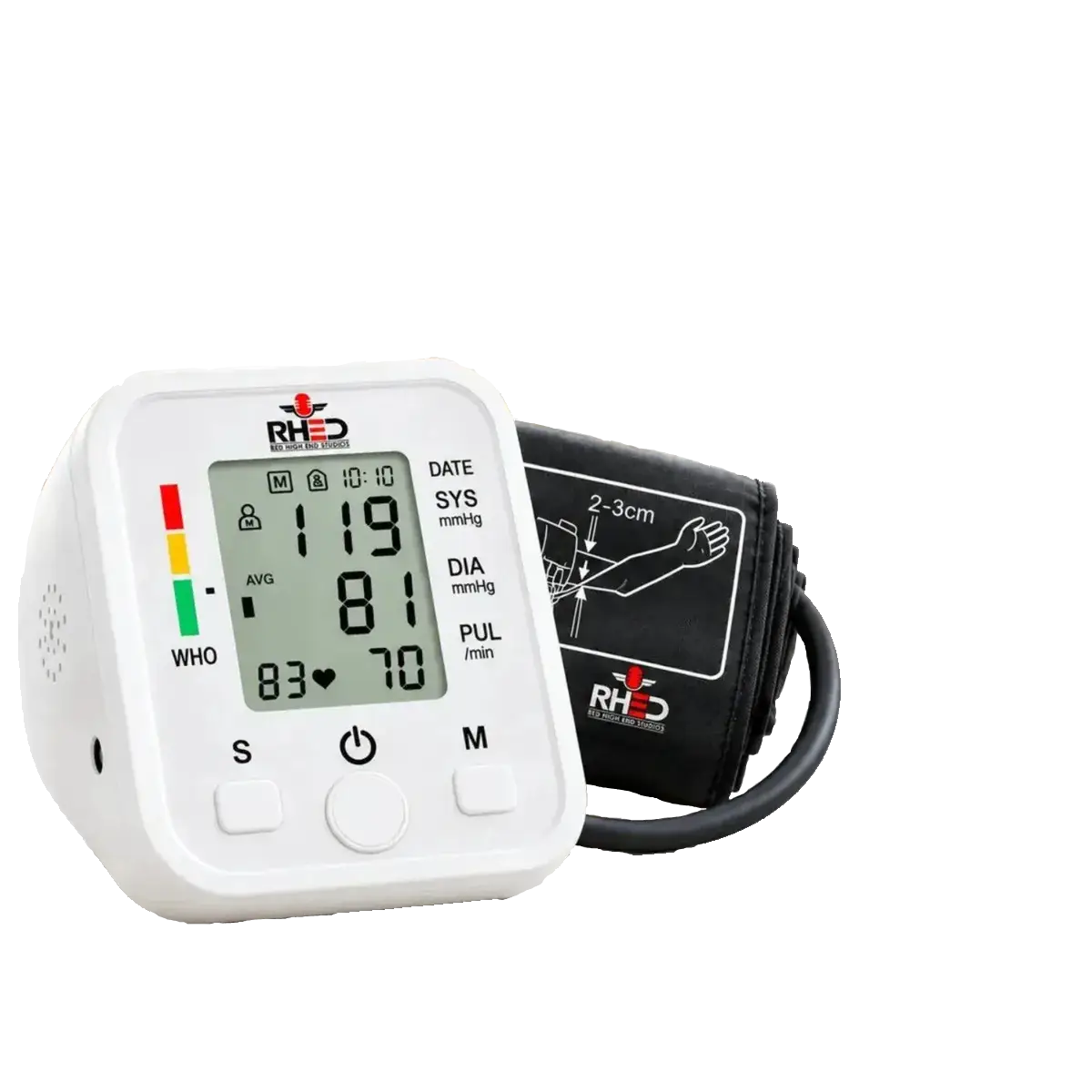
High blood pressure rarely announces itself. It is usually found by a number on a screen, which is exactly why a home monitor is one of the cheapest pieces of health equipment you can own. The Digital Blood Pressure Monitor sold on Mercado Livre for around R$ 31.56 is the entry ticket: an upper-arm cuff that measures systolic pressure, diastolic pressure and heart rate in seconds, stores readings in memory and runs from a USB cable instead of batteries. We crossed the listing's specification and verified buyer feedback with public guidance from the American Heart Association, Mayo Clinic and NIH on home measurement technique. The short answer: it is a useful, astonishingly cheap trend tracker — as long as you understand what it is not.
The Short Version: What You Need to Know
- Does it need batteries? No — buyer feedback highlights that it runs from a USB cable, so there is no battery to replace or leak. The trade-off is that you need a USB port or charger within reach of the cuff.
- Is it accurate? It is a standard oscillometric upper-arm monitor, the same measuring principle used by pricier models. There is no published clinical validation for this specific generic model, so treat it as a trend device: consistent readings over weeks are useful, one isolated number is not a diagnosis.
- Why the upper arm? Upper-arm cuffs are the reference position for home measurement. Wrist monitors are smaller but far more sensitive to hand position, which is why the AHA and Mayo Clinic prefer a cuff that sits on the arm at heart level.
- What does the irregular-heartbeat indicator do? It flags a rhythm irregularity during the measurement and shows an icon. It is a prompt to repeat the reading and talk to a doctor, not a diagnosis of any condition.
- Can the whole family use it? Yes — the listing describes it for adults and children, and the adjustable cuff covers a wide range of arm sizes. For children, ask a paediatrician which cuff size and thresholds apply.
- Is R$ 31.56 a good price? For a USB-powered upper-arm monitor with memory and voice output, it is about as low as the category goes. A clinically validated branded model usually costs several times more.
Main Characteristics
- Upper-arm measurement: the cuff inflates on the arm, the reference site for home blood pressure readings.
- Three numbers in one pass: systolic pressure, diastolic pressure and pulse, displayed after the measurement.
- Adjustable cuff: the listing describes an adjustable arm cuff, so it fits a range of adult arm sizes.
- Memory: stores previous readings so you can compare today's number with the last few days.
- Irregular heartbeat indicator: warns when the measured rhythm looks irregular during the test.
- Spoken results: verified buyers praise the audio function that announces the reading, useful for anyone with reduced vision.
- USB powered: no disposable batteries; runs from the supplied cable.
- Portable: compact body and soft cuff fit in a drawer or a travel bag.
- Automatic operation: one button inflates, measures and deflates — no stethoscope skills required.
Budget Upper-Arm Monitor vs the Alternatives
| Feature | This USB Upper-Arm Monitor | Wrist Monitor | Premium Validated Upper-Arm |
|---|---|---|---|
| Measuring site | Upper arm (reference position) | Wrist (position-sensitive) | Upper arm |
| Readings | Systolic, diastolic, pulse | Systolic, diastolic, pulse | Systolic, diastolic, pulse, often averaging |
| Power | USB cable (no batteries) | AAA batteries or USB | Batteries or USB, sometimes both |
| Memory | Stores previous readings | Usually 30–100 readings | Multi-user memory and averages |
| Irregular heartbeat alert | Yes | On many models | Yes |
| Clinical validation | Not published for this model | Varies by model | Listed on validation registries |
| Price profile | Lowest (R$ 31.56) | Low | Mid to premium |
| Best for | Daily trend tracking on a tight budget | Travel and occasional checks | People who need documented accuracy |
How to Take a Reading You Can Trust
The monitor is only half of the measurement; the other half is you. Rest for five minutes before the first reading, sit with your back supported and both feet flat on the floor, and keep the cuff at heart level. Wrap it on your bare upper arm — not over a shirt sleeve — leaving about 2–3 cm between the cuff's lower edge and the bend of the elbow, and make sure it is snug but not tight. Avoid coffee, cigarettes and exercise for 30 minutes beforehand, empty your bladder, and do not talk during the test. Take two readings about one minute apart and write down the average. Measure at the same times each day, ideally morning and evening, because blood pressure follows a daily rhythm. If the cuff feels too small or too large for your arm, the reading will be off; the Mayo Clinic notes that cuff size alone can change a result significantly.
Where It Shines — and Where It Doesn't
It shines as a first monitor: the price is lower than a single pharmacy visit in many cities, the upper-arm position is the right one, and USB power removes the classic "dead batteries" failure. Verified buyers describe it as easy to use, a good value, accurate in their day-to-day comparisons, and they specifically like the cable power and the spoken results. It does not pretend to be a clinical device. There is no published validation for this exact generic model, the memory is basic rather than app-connected, and the build is budget plastic. For someone who needs to document readings for a cardiologist, a validated branded monitor with averaging and a proper cuff-size range is the safer purchase. Use this one to notice trends, not to self-diagnose.
Pros and Cons
Pros
- Upper-arm cuff, the position recommended for home readings
- Very low price — around R$ 31.56
- USB powered, so no batteries to buy or leak
- Measures pressure and heart rate in seconds
- Memory, irregular-heartbeat indicator and spoken results
- Simple one-button operation for non-technical users
Cons
- No published clinical validation for this model
- Needs a USB port or charger near the measuring spot
- Basic memory — no app, no automatic averages
- Budget build and a generic cuff
- Not a substitute for a doctor's diagnosis
Frequently Asked Questions
Does this blood pressure monitor need batteries?
No. Verified buyer feedback and the listing highlight USB power: the device runs from a cable, so there are no disposable batteries. That saves money over time and avoids the classic problem of a monitor dying mid-reading. Just plan where you will plug it in, and keep the cable with the cuff.
Is a R$ 32 blood pressure monitor accurate?
It uses the same oscillometric method as more expensive upper-arm monitors, but accuracy depends on the individual unit, the cuff fit and your technique. There is no published clinical validation for this specific generic model, so use it to follow trends and compare consecutive readings rather than to make decisions from a single number. If readings are consistently high, confirm them with a doctor using a validated device.
What should I do about the irregular heartbeat symbol?
The indicator means the monitor detected an irregular rhythm during that measurement. It can happen with movement, a loose cuff or an actual arrhythmia. Stay still, repeat the reading after a few minutes, and if the symbol keeps appearing — or you feel palpitations, dizziness or chest discomfort — see a doctor. It is a prompt, not a diagnosis.
Why is my reading different from the one at the clinic?
Blood pressure changes constantly with stress, temperature, caffeine, a full bladder, talking and arm position. Clinic readings also use a different cuff and a trained operator. Measure at home after five minutes of rest, same time of day, and compare averages over a week — not one reading against one reading. Some people even have "white-coat" readings that are higher at the clinic.
Can children use it?
The listing describes the device for adults and children, but paediatric blood pressure needs the right cuff size and age-specific thresholds. Ask a paediatrician before using an adult upper-arm monitor on a child, and never interpret a child's reading with adult cut-offs.
How do I keep the cuff and monitor in good condition?
Wipe the body with a soft, dry cloth and keep it away from water, heat and direct sunlight. Do not fold the cuff sharply or store heavy objects on it, and check that the tube is not pinched before measuring. Replace the cuff if the fabric tears or the hook-and-loop fastener stops holding — a loose cuff produces unreliable numbers.
Check Today's Price
Live pricing from trusted sellers on Mercado Livre. Budget upper-arm monitor with USB power, memory and spoken results.
Check today's price View on Mercado LivreAs an affiliate, we may earn a commission when you buy through our links. At no extra cost to you. It never changes our opinion.
More From the Health Desk
If you want to track heart rate between cuff readings, our Samsung Galaxy Fit3 review covers a cheap wearable that logs pulse all day. For a bigger screen and a longer battery, the Xiaomi Redmi Watch 6 review is the next step up. Neither replaces a cuff for blood pressure — wearables do not measure pressure — but together they give a fuller picture of your cardiovascular routine.