
Smartphones · Comparison
Galaxy S26 Ultra vs iPhone 18 Pro Max vs Pixel 11 Pro XL: Which 2026 Flagship Wins?
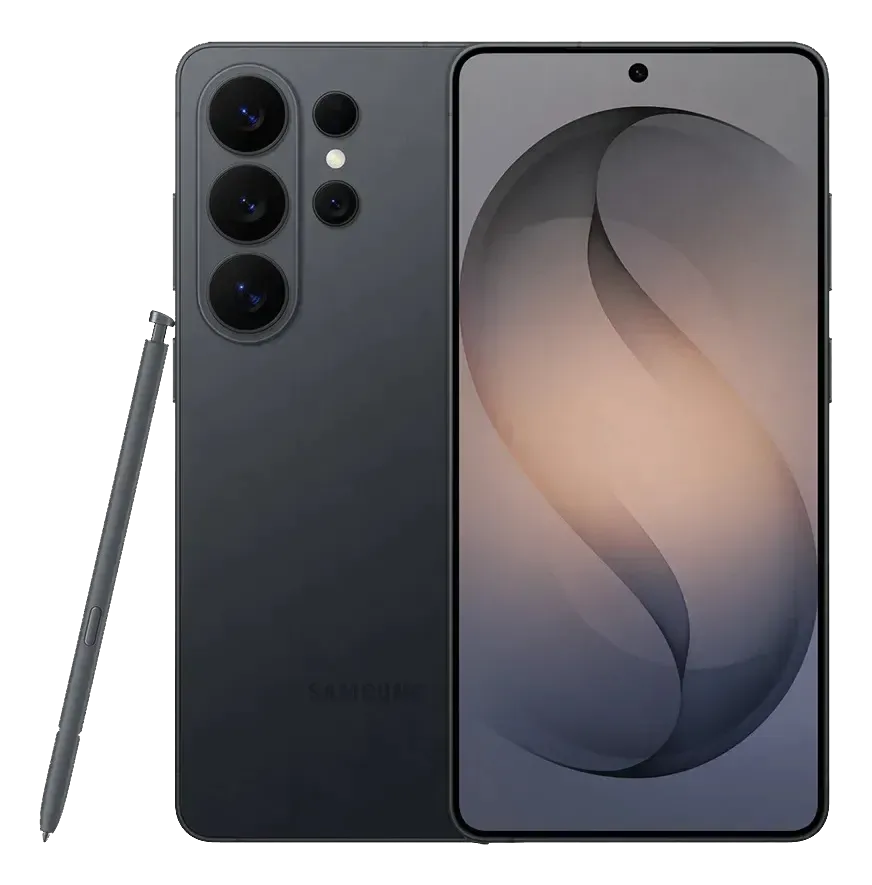
Three phones own the 2026 flagship conversation: Samsung's Galaxy S26 Ultra, Apple's iPhone 18 Pro Max and Google's Pixel 11 Pro XL. They launch at the same $1,299, they all carry 6.8–6.9-inch LTPO panels, and none of them is a bad buy, which is exactly what makes the decision hard. The Galaxy is the hardware generalist: Privacy Display, a built-in S Pen, two real telephoto lenses and the thinnest, lightest body of the three. The iPhone is the endurance and raw-power specialist. The Pixel is the AI and clean-Android play. This comparison settles which of those priorities actually matches how you use a phone.
Quick Verdict
- Best overall / most versatile: Galaxy S26 Ultra. Privacy Display, built-in S Pen, 200MP main plus true 3x and 5x optical zoom, and the only one here with DeX desktop mode.
- Best battery life: iPhone 18 Pro Max, roughly 18.5 hours in Tom's Guide's battery drain test against about 16h40 for the Galaxy; 50% charge in 15 minutes on 60W.
- Best camera for zoom: Galaxy S26 Ultra, the only phone here with two dedicated optical telephotos, so 1x–10x stays sharp without sensor crops.
- Best camera for video and low light: iPhone 18 Pro Max, mechanical variable aperture, ProRes RAW, 4K 120fps and cleaner night shots in Tom's Guide's face-off.
- Best AI and selfies: Pixel 11 Pro XL. Gemini at the OS level and a 42MP autofocus front camera that doubles the Galaxy's 12MP.
- Best performance: iPhone 18 Pro Max. Geekbench 6 of 4,741 single-core and 12,789 multi-core versus 3,785 / 11,563 for the Galaxy; the Galaxy answers back in on-device AI (83,047 vs 71,974 in Geekbench AI).
- Best long-term support: tie, Galaxy and Pixel, seven years of OS and security updates; the iPhone historically gets six or more iOS generations.
- Best value: Galaxy S26 Ultra, same $1,299 launch price as the iPhone, but it has been on the market since March and is regularly discounted.
Full Specs Comparison Table
| Feature | Galaxy S26 Ultra | iPhone 18 Pro Max | Pixel 11 Pro XL |
|---|---|---|---|
| Display | 6.9" Dynamic AMOLED 2X QHD+ (3120×1440, ~500 ppi), 120Hz, 2600 nits, Privacy Display | 6.9" Super Retina XDR (2868×1320, ~460 ppi), 120Hz ProMotion, 3000 nits, Ceramic Shield 2 | 6.8" Super Actua LTPO AMOLED QHD+, 120Hz, 3600 nits peak |
| Chipset | Snapdragon 8 Elite Gen 5 for Galaxy (3nm), 12GB RAM (16GB on 1TB) | Apple A20 Pro (2nm), 12GB RAM | Google Tensor G6, up to 16GB RAM |
| Rear Camera | 200MP ƒ/1.4 + 10MP 3x tele + 50MP 5x periscope + 50MP ultrawide | 48MP variable aperture ƒ/1.48–ƒ/4.0 + 48MP 4x tele + 48MP 120° UW + LiDAR | 50MP main + 48MP 5x periscope + 48MP ultrawide (Pro Res Zoom 120x) |
| Front Camera / Video | 12MP / 8K 30fps, 4K 120fps, Horizon Lock | 18MP Center Stage / 4K 120fps, ProRes RAW, Apple Log 2 | 42MP autofocus / 4K 60fps |
| Battery / Charging | 5000mAh / 60W wired (75–77% in 30 min), 25W wireless | 5391–5567mAh / 60W wired (50% in 15 min), 25W MagSafe/Qi2 | 5115mAh / 45W wired, 25W magnetic wireless |
| Lab Battery Score | 16:23h active use (GSMArena) · ~16h40 (Tom's Guide) | 19:20h active use (GSMArena) · ~18h30 (Tom's Guide) | Solid 6–8h screen-on; no equal GSMArena active-use score |
| Benchmarks | AnTuTu 3,892,165 · Geekbench 6: 3,785 / 11,563 · Geekbench AI 83,047 | Geekbench 6: 4,741 / 12,789 · 3DMark Solar Bay 17,850 · Geekbench AI 71,974 | Trails both in raw CPU/GPU; built for on-device AI workloads |
| Build / Weight | Aluminum + Gorilla Armor 2, IP68 (1.5m), 214g / 7.9mm, S Pen built-in | Aluminum + Ceramic Shield 2, IP68 (6m), 249g / 8.8mm | Aluminum + Gorilla Glass Victus 2, IP68, 232g |
| Software / Updates | Android 16, One UI 8.5, Galaxy AI + DeX (7 years updates) | iOS 27 with Siri AI (region-dependent) | Android 17, Gemini (7 years updates + Pixel Drops) |
| Storage Options | 256GB / 512GB / 1TB | 256GB / 512GB / 1TB / 2TB | 256GB / 512GB |
| Launch Price (256GB) | From $1,299 / €1,449: typically discounted | From $1,299 / €1,599 | From $1,299 |
Galaxy S26 Ultra: The Feature-Packed All-Rounder
Samsung's flagship does not win on one headline spec, it wins by stacking the longest list of genuinely useful hardware. The Privacy Display uses directional pixels so your bank balance, passwords or notifications look blank to anyone watching from the side, and it can be enabled per app or automatically when you type a PIN; nothing on the iPhone or Pixel does this. The S Pen is still the only stylus built into a mainstream flagship, ideal for signatures, sketches and precise photo edits. The camera is the most flexible of the three: a 200MP ƒ/1.4 main sensor, a 10MP 3x telephoto and a 50MP 5x periscope, so the 1x–10x range stays optical instead of leaning on digital crops, plus 8K recording and Horizon Lock for shake-free video. It is also the thinnest and lightest of the trio at 7.9mm and 214g, runs the Snapdragon 8 Elite Gen 5 at an AnTuTu score near 3.89 million, charges to 75% in 30 minutes at 60W and is promised seven years of updates. The trade-offs are real: the 5,000mAh cell is unchanged for a sixth year and gives up about two hours of endurance to the iPhone, One UI 8.5 is busier than iOS 27 or stock Android, and the camera plateau makes the phone wobble on flat tables.
Read the full verdict in our Samsung Galaxy S26 Ultra review.
Price on Mercado Livre: Check the Galaxy S26 Ultra price
Pros
- Privacy Display, a world-first no iPhone or Pixel can match
- Most versatile camera: 200MP main with true 3x and 5x optical zoom
- Built-in S Pen plus Samsung DeX desktop mode
- Thinnest and lightest of the three: 7.9mm, 214g
- 7 years of OS and security updates; 60W gets 75% in 30 minutes
- Sharpest panel: QHD+ at ~500 ppi with an anti-reflective coating
Cons
- 5,000mAh battery unchanged since 2020, weakest endurance here
- Raw CPU/GPU power trails the A20 Pro in every benchmark
- One UI 8.5 feels busier than iOS 27 or Android 17
- Large camera plateau makes the phone wobble on flat surfaces
- No mechanical variable aperture or Pro-level manual video controls
iPhone 18 Pro Max: The Battery and Performance King
Apple's flagship trades hardware breadth for depth in three areas. Endurance: 5,391–5,567mAh posted 19:20 hours of active use in GSMArena's lab and about 18.5 hours in Tom's Guide's drain test, nearly two hours ahead of the Galaxy. Performance: the 2nm A20 Pro scores 4,741 / 12,789 in Geekbench 6 and 17,850 in 3DMark Solar Bay, comfortably ahead of the Snapdragon, helped by a vapor chamber three times larger than the A19 Pro's. Camera control: a six-blade mechanical variable aperture (ƒ/1.48–ƒ/4.0) with full manual Pro controls, plus 4K 120fps ProRes RAW video that remains the reference for mobile filmmakers. Reviewers at Tom's Guide also found it cleaner in low light than the Galaxy. What you give up: only a 4x optical telephoto where the Galaxy has two, no S Pen, no privacy screen, no stylus, no DeX, and at 249g it is the heaviest phone here.
Read the full verdict in our iPhone 18 Pro Max review.
Pros
- Best battery life here: 19:20h GSMArena active use, ~18.5h Tom's Guide
- Fastest chip: A20 Pro 2nm, 4,741 single-core in Geekbench 6
- Unique variable aperture with true manual Pro camera controls
- Best video pipeline: 4K 120fps, ProRes RAW, Apple Log 2
- 50% charge in 15 minutes; up to 2TB of storage
Cons
- Heaviest and thickest here: 249g, 8.8mm
- Single 4x telephoto, less zoom reach than the Galaxy's dual setup
- No S Pen, no Privacy Display, no desktop DeX equivalent
- Siri AI still not available in every region at launch
- No charger in the box
Price on Mercado Livre: Check the iPhone 18 Pro Max price
Pixel 11 Pro XL: The AI and Clean-Android Pick
Google's approach is to win where software matters. Gemini runs at the OS level on the Tensor G6, giving the most natural photo editing, translation and call-screening experience of the three, and Android 17 stays the cleanest interface here. Hardware is no afterthought: the brightest panel of the group at 3,600 nits, a 42MP autofocus selfie camera that beats both rivals by more than 2x, a true 5x periscope with Pro Res Zoom out to 120x, 25W magnetic wireless charging and the same seven-year update promise as Samsung. The gaps show up in raw speed, the Tensor G6 trails the A20 Pro and the Snapdragon 8 Elite Gen 5 in CPU, GPU and gaming workloads, and in charging, where 45W is the slowest of the trio. High-magnification zoom also leans on generative AI rather than glass.
Dedicated Pixel 11 Pro XL review coming soon. Meanwhile our iPhone 18 Pro Max review shows what the iOS alternative offers in depth.
Pros
- Deepest AI integration: Gemini built into Android 17
- Brightest display of the three: 3,600-nit peak
- 42MP autofocus selfie camera: best of the trio
- 7 years of updates plus Pixel Drops, cleanest software
- Magnetic wireless charging and a genuinely competitive $1,299 price
Cons
- Tensor G6 trails both rivals in raw performance
- 45W charging, slowest of the three
- Pro Res Zoom leans on generative AI at high magnifications
- Smallest storage ceiling at 512GB
- No stylus, no privacy display, no desktop mode
Head-to-Head: Galaxy S26 Ultra vs iPhone 18 Pro Max
The most-searched pairing of 2026, and it splits cleanly. The iPhone wins on battery (~18.5h versus ~16h40 in Tom's Guide), raw speed (4,741 vs 3,785 single-core) and low-light/video shooting thanks to its variable aperture and ProRes RAW. The Galaxy answers with two optical telephotos instead of one, a sharper QHD+ screen, Privacy Display, the S Pen, DeX, 35g less weight and seven years of guaranteed Android updates. Both cost $1,299 at launch, but the Galaxy has been out since March and is regularly discounted, so real-world pricing usually favours Samsung. Zoom, privacy and productivity: Galaxy. Battery, performance and video: iPhone.
Head-to-Head: Galaxy S26 Ultra vs Pixel 11 Pro XL
Hardware versus software. The Galaxy brings the better on-paper camera (200MP plus two real telephotos), the faster chip, the S Pen and the Privacy Display; the Pixel counters with the brightest screen, the best selfie camera, the cleanest AI experience and magnetic wireless charging, plus the same seven-year update runway. Benchmarks favour Samsung, day-to-day AI favour Google, and both undercut the iPhone in weight and complexity. Pick the Galaxy if you want tools you can touch; pick the Pixel if you want software that thinks ahead.
Head-to-Head: iPhone 18 Pro Max vs Pixel 11 Pro XL
The iOS-versus-Android debate with an AI twist. The iPhone is faster, lasts roughly three hours longer in lab use, charges 50% in 15 minutes and offers the strongest video toolkit. The Pixel answers with a brighter display, a far better selfie camera, longer guaranteed support, a lighter body and a materially cleaner AI layer in Gemini, at the same $1,299 starting price. If you live in Apple's ecosystem, the decision is made; if you don't, the Pixel is the smarter buy unless you specifically need that much battery.
Frequently Asked Questions
Is the Galaxy S26 Ultra still worth buying in 2026?
Yes, it is the most complete hardware package of the three. Privacy Display and the built-in S Pen have no equivalent on the iPhone 18 Pro Max or Pixel 11 Pro XL, the dual 3x/5x optical zoom is the most flexible camera hardware here, it is the lightest and thinnest of the trio, and seven years of updates run through 2033. The only reason to hesitate is battery life: its 5,000mAh cell gives up roughly two hours of active use to the iPhone. If you charge nightly anyway, that trade is easy to live with, especially since the Galaxy has been out since March and is usually the cheapest of the three to buy.
Which has the best camera?
It depends what you shoot. For zoom and framing flexibility, the Galaxy S26 Ultra: it is the only phone with two true optical telephotos (3x and 5x), so portraits and mid-range shots stay sharp without digital cropping. For video and low light, the iPhone 18 Pro Max. Mechanical variable aperture, 4K 120fps ProRes RAW and cleaner night results in Tom's Guide's testing. For natural-looking computational photos, portraits and selfies, the Pixel 11 Pro XL, whose 42MP front camera beats both rivals outright.
Which is faster?
The iPhone 18 Pro Max in raw terms: Geekbench 6 single-core of 4,741 and multi-core of 12,789 against 3,785 / 11,563 for the Galaxy's Snapdragon 8 Elite Gen 5, plus a 17,850 score in 3DMark Solar Bay. For on-device AI work the Galaxy flips the result, 83,047 versus 71,974 in Geekbench AI 1.7, and the Pixel's Tensor G6 is tuned for AI efficiency rather than peak scores, so it trails both in demanding games.
Which battery lasts longest?
The iPhone 18 Pro Max. GSMArena measured 19:20 hours of active use against 16:23 for the Galaxy S26 Ultra, and Tom's Guide's drain test gave the iPhone about 18.5 hours versus roughly 16h40 for the Samsung. The Pixel sits in between on capacity (5,115mAh) but charges slowest at 45W. On wired charging speed the Galaxy and iPhone are effectively tied, both reach around 75% in 30 minutes.
Galaxy S26 Ultra or iPhone 18 Pro Max, which should I buy?
Buy the Galaxy S26 Ultra if you want the most versatile camera, the S Pen, Privacy Display, DeX, a lighter body and seven years of guaranteed Android updates. Buy the iPhone 18 Pro Max if battery life, raw performance, low-light photography and video production come first. Both launch at $1,299, so the decision is about priorities, not budget: and in practice the older Galaxy is usually the one on sale.
Do the Galaxy and the Pixel really get seven years of updates?
Yes. Samsung and Google both commit to seven years of OS and security updates, which puts the Galaxy S26 Ultra and Pixel 11 Pro XL on the same timeline through 2033. Apple does not publish a fixed number for iPhones but has historically delivered six or more major iOS versions, so the iPhone 18 Pro Max on iOS 27 should remain supported well into the 2030s as well.
Find the Best Price Today
Live prices from trusted sellers on Mercado Livre. Samsung Galaxy S26 Ultra 256GB, unlocked, new, with standard warranty.
As an affiliate, we may earn a commission when you purchase through our links, at no extra cost to you. This never changes our opinion.